Going beyond productivity to imagine possibility, historical AI avatars, and the power of human consciousness. Whether it be in the office or on the airplane headed to our next program, we’re always talking about the issues and trends that are shaping the way we learn as well as what interests each of us on the team. Read more below.
Envisioning the future
While productivity will always be the benchmark for success, this article in Training Manager argues that true progress requires prioritizing possibility. Busy cultures often confuse motion with momentum, neglecting the creative thinking needed for real innovation and risk losing the capacity to imagine the future. Visionary leaders model possibility-first thinking, normalize ambiguity, and protect time for reflection. Productivity wins the day, but possibility wins the decade.
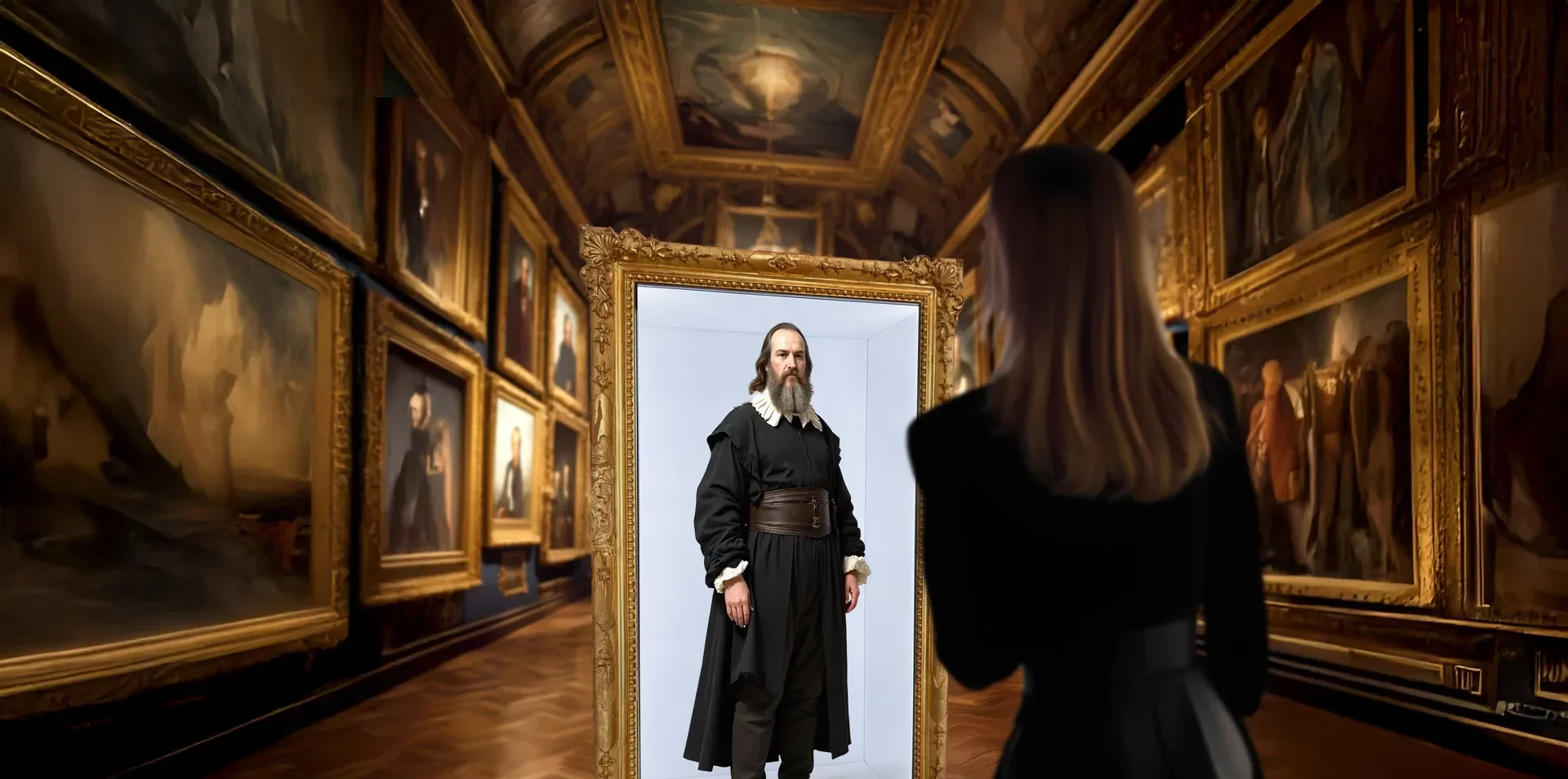
But what if the talking head was Isaac Newton?
We know you’ve seen them at conferences, airports, or hotels: the AI hologram boxes. If you’re lucky, you even had a stilting conversation with one. Ailias, a UK-based company adds a twist by including historical figures like Einstein, Newton, and Cleopatra. These avatars, powered by open-source AI, can converse in real time, and, best of all, perform actions like juggling or breakdancing. The experience is fun, informative, and engaging if a little historically inaccurate. Just prepare for disappointment if Al is not super impressed with your elevator pitch; he’s supposed to be Einstein trapped in a box, after all.
Human after all
If you too are starting to feel more than a little alienated by the idea most work will soon be for AI, Michael Pollan’s new book, A World Appears, may be a welcome respite as he challenges the notion that AI can replicate human consciousness. Pollan argues that consciousness remains an unsolved mystery despite centuries of scientific inquiry and explores the limits of materialism and technology. Consciousness is the last frontier science cannot conquer, reclaiming a sense of human wonder. By all means, lets use the amazing tools at our disposal, but don’t forget the mystery of being human.
Be careful what you brag about
Had a Microsoft engineer not bragged a bit too much at a dinner party about a stylus-driven tablet, the iPhone might not exist. Steve Jobs was so annoyed he famously retorted, ‘God gave us 10 styluses,’ a moment chronicled in David Pogue’s Apple: The First 50 Years. Originally intent on a revolutionary tablet, Jobs pivoted to phones only when the hardware proved too bulky—launching the top-secret Project ‘Purple’ and effectively inventing the modern smartphone out of equal parts innovation and irritation.